Digital Nomad Fully Guide for Beginners (2026): How to Build an Online Income System for Global Living
A practical, beginner-friendly roadmap to becoming a digital nomad: build a sustainable online income system, grow a company of one, and make global living financially possible.
In six years of living as digital nomads, we’ve had months where we earned almost nothing—and we’ve also seen what it looks like to hit five-figure months.
A lot of people think being a digital nomad means escaping the grind and traveling forever. That’s the biggest misconception. Without a solid online income system, you don’t become a digital nomad—you become a “digital refugee.”
Based on what we’ve learned over the last six years, this article lays out a complete, no-fluff path: from getting started to leveling up, how an ordinary person can build an income system that actually supports global living.
Where do you even start as a digital nomad?
At many global digital nomad events, people summarize the typical “evolution path” like this:
Remote employee → Freelancer → Entrepreneur → Investor
It’s a proven sequence—but in 2026, it can feel outdated and painfully slow.
If you’re starting today, you can absolutely approach this with an entrepreneur’s mindset much earlier.
Entrepreneur: the route I recommend most (and the one I’m on)
At its core, “entrepreneur” means becoming a creator and building your own online business.
If you want a low-cost way to start, I strongly recommend content-driven entrepreneurship.
Some longtime readers may know that I used to be a designer taking remote client work. Six years ago, we started traveling while working and began building the “Chinese Nomads” account. At first, we were simply sharing life with no clear goal. Over time, we consistently invested in it, grew to hundreds of thousands of followers across platforms, and three years ago, the income from this IP exceeded my design income entirely.
We’ve tried almost every monetization route in content:
Traffic revenue is extremely unstable and mostly “baseline income.” Brand deals can pay well per campaign, but the bar is high and it still ties money to your time. Services (consulting, events) can generate cash quickly—but they drain your energy and are hard to scale.
After trying all of them, what I recommend most is building your own digital products.
Compared to advertising (which demands scale), digital products can monetize even with a smaller audience. The underlying logic isn’t chasing vanity follower counts—it’s building “1,000 true fans.” If 1,000 people are willing to pay for what you do, you can live a very decent life.
The biggest advantage is compounding: build once, distribute forever. You won’t make a fortune overnight, but you can progressively decouple income from time. Your work becomes an asset—exactly what most digital nomads are actually looking for.
One example from our community: an IELTS teacher spent 30 days packaging her teaching materials into digital products and selling them online with automated delivery. She started with a 9.9 RMB entry product, then moved up to higher-ticket products (199 / 299 RMB). That “sleep income” added up to several hundred thousand RMB, and she’s been living globally for two years.
In the AI era, building a company of one has never been easier. But the most important thing isn’t learning random skills—it’s identifying a real problem you personally face and deeply want to solve.
You can use AI coding tools (vibe coding) to build a tool that solves that problem, share the building process publicly, and attract your first users. That’s the “build in public” approach: the product is the core, content is the distribution.
Or you can choose a niche you genuinely care about, clarify what value you can deliver (a tool, a course, an experience…), and commit to publishing 50–100 pieces of content in that niche. Once you’ve built trust and a clear point of view, monetization tends to follow naturally. In this approach, content is the core and products become the revenue channel.
I also strongly recommend building for a global audience: publish on Chinese platforms, but also distribute on global platforms like YouTube, X, and Instagram.
If you serve an international audience, you’ll eventually run into the “how do I get paid in USD” problem. Here’s a practical option to save for later.
After comparing multiple routes, I believe the most compliant and long-term solution is to register an overseas company. Based on my research, a Hong Kong company is one of the most nomad-friendly options: strong reputation, high acceptance by international clients and payment providers, and a territorial tax system—if profits are sourced offshore, you typically don’t pay Hong Kong profits tax.
The annoying part is paperwork: incorporation, bookkeeping, and filings. In my research I found a one-stop platform called Osome that makes these tasks much easier.
A few highlights: fully remote setup (no need to fly to Hong Kong), integrations with digital banks like Aspire and Airwallex, and an “enterprise health dashboard” that syncs bank transactions so you can track finances in real time. Plus there are real accountants and advisors supporting compliance.
Fan-exclusive discount: I have an Osome referral link. If you use it, you’ll get 16% off. If you’re planning to build internationally, bookmark it.
Hong Kong company registration discount link:
https://osome.com/hk-zh/referral/16off/?aff_name=Never+Know+Adventure&coupon=NKAHK16_INF
Singapore company registration discount link:
https://osome.com/sg-zh/referral/16off/?aff_name=Never+Know+Adventure&coupon=NKASG16_INF
UAE company registration discount link:
https://osome.com/ae/referral/incorporation/?aff_name=Never+Know+Adventure&coupon=NKAUAE16_INF/
Remote employee: the safest transition—but it shouldn’t be the end goal
If you don’t have a clear business direction yet, starting as a remote employee can be a very safe transition.
It’s also the largest segment among digital nomads today. But I’ll be direct: it’s not the path I’d choose as the final destination. It’s best suited for people who need maximum stability—or who genuinely love a role that pays well and can be done remotely.
To be a remote employee, you need a skill you can sell. And remote roles aren’t limited to developers and designers: language teachers, operations, digital marketing, virtual assistants, and many other non-technical roles also have remote opportunities. Search remote job boards to see what fits—and if your skills don’t match yet, use AI to learn faster.
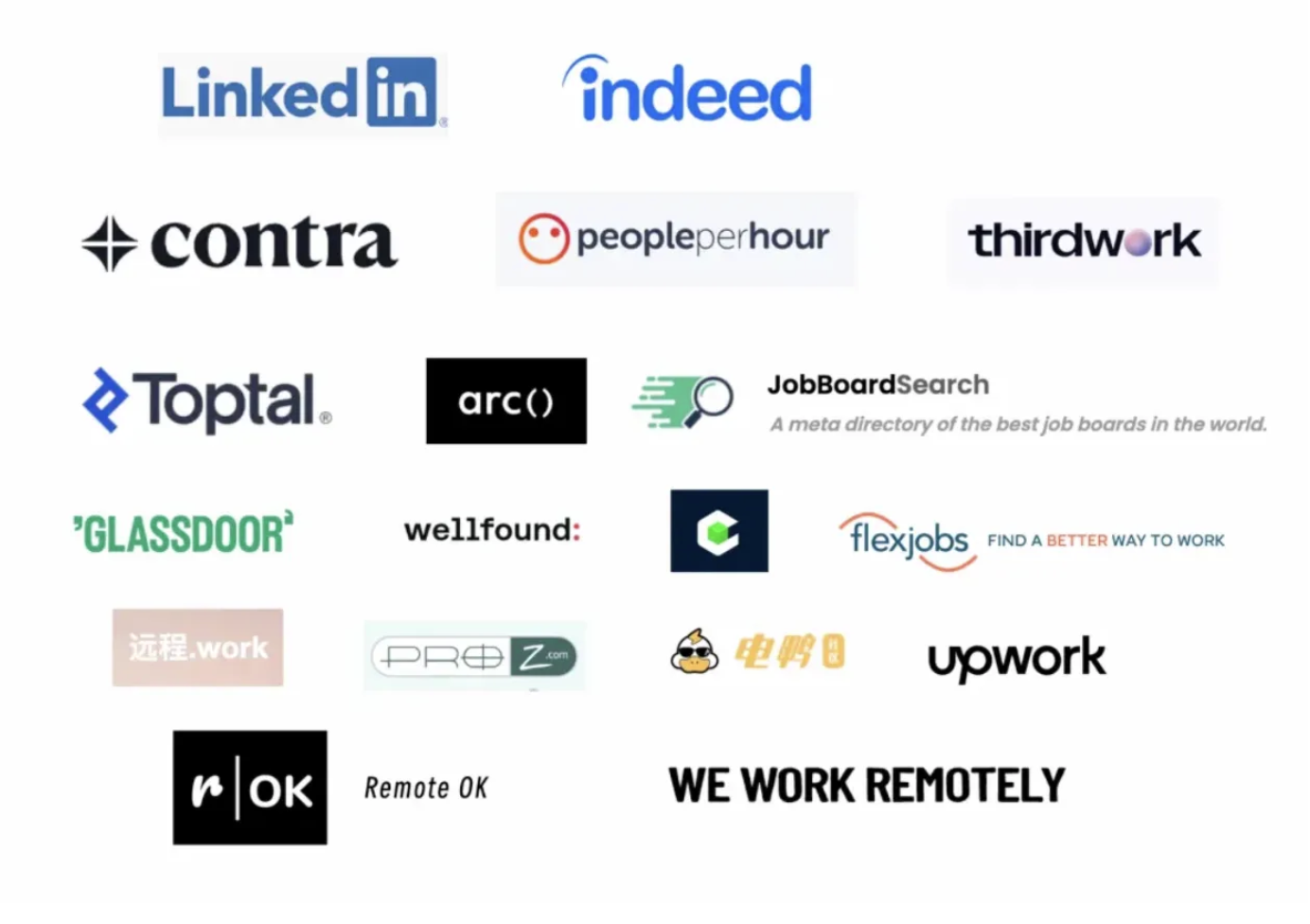
One truth most people don’t know: around 80% of remote roles never make it to public job boards. The most effective path is referrals from people already working remotely, or building relationships at digital nomad events. If you want to become a digital nomad, go where digital nomads gather.
And yes—English is a real cheat code. The international remote ecosystem is far more mature than the domestic one. Once you clear the language barrier, your options expand dramatically. If you have spare time, practice English with AI.
Freelancer: you get pricing power, but instability is the default
Freelancing is an early stage of being your own boss. Once you have skills and clients, you can try this route. The biggest shift is pricing power: you’re no longer paid monthly—you’re paid for the value of the project. Your schedule becomes more flexible.
But that freedom comes with a cost: income volatility. The hardest part is consistently acquiring high-quality clients.
I freelanced as a designer on and off for three to four years, but early last year I officially stopped. Two reasons: AI put pressure on many technical roles and demand clearly dropped; meanwhile, I shifted my focus to building the “Chinese Nomads” account, so my self-marketing stalled and only a few legacy clients remained.
If you want to go the freelance route, here are two principles:
First, don’t become an “order-taking machine.” Instead of competing on price on platforms, learn to build a brand: run a professional account, show your problem-solving process, and use it to attract better clients.
Second, always build multiple income legs. Sustainability comes from expanding skills, resources, and collaborations—partner with complementary friends, or build products/services alongside your client work. In our community, a commercial writer built courses, a podcast, and an audience while still taking client work, so income was no longer tied to “taking orders.”
Let money work for you: investing is the final piece
“Investor” is the long-term endgame for financial freedom: income channels that can run even when you don’t work.
I only started investing seriously after we began living globally. The trigger was simple: on the road, we met people living in low-cost countries off short-term trading gains, and others who embraced FIRE and traveled the world through long-term investing.
Those real examples made one thing clear: investing isn’t a nice-to-have for digital nomads—it’s a safety net.
No matter which of the first three stages you’re in, you can start learning investing as early as possible. Begin with classic books, find a method that fits you, and learn by doing.
If you invest well and commit to long-term thinking, wealth compounds faster. One speaker at a digital nomad summit invested for 10 years and went from employee to financially free.
We now consistently allocate part of our income into long-term investing. The goal is simple: one day, cash flow from assets covers our living costs—so we’re no longer forced to work.
Final notes
If you’re at the 0→1 transition stage, the safest approach is to experiment while you still have a job: a small business, client work, or a side hustle. Earn your first bucket of money, then accelerate.
If you decide to quit and start from scratch, I’d recommend having at least a year of runway. Data-wise, the average cycle to earn good income after a major career transition is about three years—it won’t be instant.
Most importantly: avoid debt. Anxiety and financial pressure kill creativity.
And remember: being a digital nomad isn’t a job title, and it’s not a vacation. It’s a long-term life design skill—stable finances, strong mental resilience, and the ability to create order while moving.
Every mature digital nomad I know works extremely hard. That’s what makes the lifestyle sustainable.
If you found this useful, feel free to save and share it with a friend—so more people can see there’s more than one way to live.
About us
We’re Ding & Pan, a Chinese digital nomad couple who have been living globally for 6 years. Ding is a visual designer and Pan is a classical yoga teacher. We’re also content entrepreneurs.
In 2019, we quit our jobs, flew from Shanghai to Latin America, drove across Mexico in a camper van, and then got hit by the pandemic. That’s when we transformed into digital nomads and learned how to travel and earn online at the same time.
Over 6+ years we’ve lived across the Americas, Asia, and Europe (10+ countries/regions), and deeply experienced many different communities—eco villages, spiritual communities, and digital nomad hubs. We’re currently based in Chiang Mai, Thailand.
Our media account “Chinese Nomads” (same name across platforms) shares our lifestyle and reflections. We have 600k+ followers across platforms and tens of millions of views. We also run an online nomad community with 700 members—welcome to join us if you’re interested.